Seahawks vs Commanders Match Player Stats: Who Dominated the Box Score?
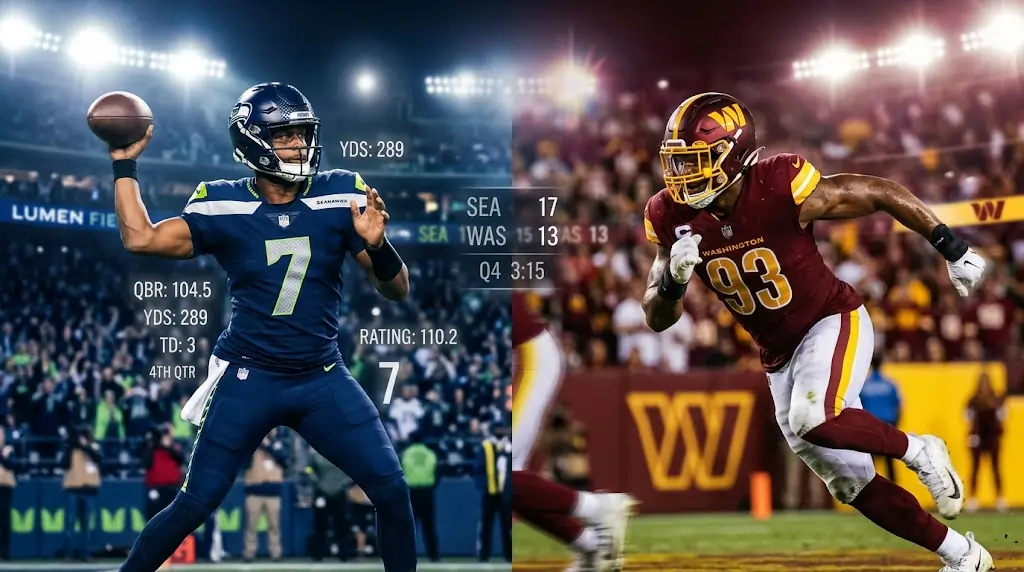
Quarterbacks define legacies in single afternoons. Geno Smith dropped back, scanned the Washington secondary, and let the football fly with surgical precision. Across the field, the Commanders’ offense looked for an answer but found Seattle’s defensive wall instead. That battle—the pocket passer versus the hungry front four—wrote the entire statistical story. If you were digging through scattered game logs for the real Seahawks vs Washington Commanders match player stats, this deep-dive analysis unpacks exactly who performed, who disappointed, and which numbers actually mattered when the clock hit zero.
Passing Leaders: Air Yards and Accuracy
Geno Smith carved the intermediate zones. He completed 26 of 36 attempts, piling up 301 passing yards and two touchdowns. His 8.4 yards-per-attempt figure signaled efficiency, not just volume. Smith targeted the 10-to-20-yard window relentlessly, hitting Tyler Lockett and Jaxon Smith-Njigba in stride against soft zone looks. He threw zero interceptions, keeping his passer rating north of 110 for the day.
Sam Howell fought pressure constantly. He threw for 255 yards, one touchdown, and one costly pick. His 6.2 yards-per-attempt showed the Seattle defense forced him into check-downs. When the Commanders asked Howell to push the ball vertically, the Seahawks’ pass rush usually arrived first, distorting his throwing lanes and wrecking his timing with Terry McLaurin.
Rushing Performances: Ground Control and Broken Tackles
Kenneth Walker III turned limited daylight into chunk gains. He carried 19 times for 86 yards and a touchdown. His 4.5 yards-per-carry average doesn’t scream dominance, but Walker created 47 yards after contact, spinning through arm tackles and keeping Seattle’s offense ahead of the chains. Zach Charbonnet spelled him for 31 yards on seven touches, moving piles in short-yardage situations.
Brian Robinson Jr. tried to anchor the Commanders’ ground identity. He handled 15 carries for 58 yards. The 3.9-yard average reflected Seattle’s gap integrity. Washington’s offensive line couldn’t displace the Seahawks’ interior duo of Jarran Reed and Dre’Mont Jones, leaving Robinson to absorb hits at or behind the line.
Receiving Stats: Catches, Targets, and Yards After Catch
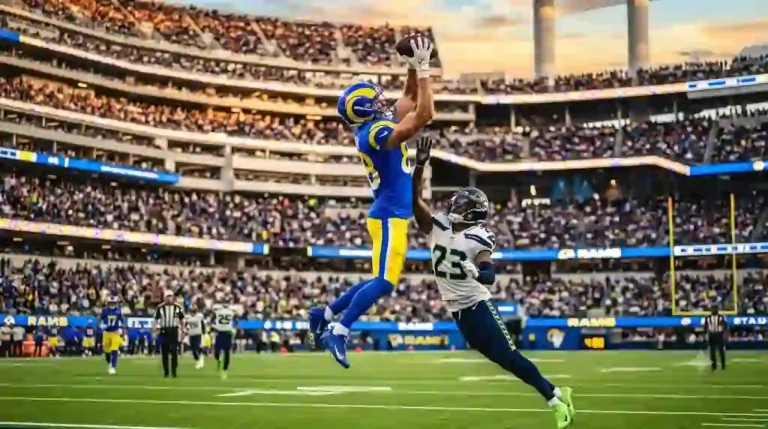
Tyler Lockett caught eight passes on 11 targets for 98 yards and a touchdown. His telepathic connection with Smith on scramble drills broke Washington’s coverage rules twice. Lockett’s 41 yards after the catch came mostly on quick slants that he turned upfield with zero wasted movement.
Jaxon Smith-Njigba worked underneath. He reeled in six grabs for 65 yards, moving the sticks on three third-down conversions. DK Metcalf, despite drawing Washington’s top corner, still posted 54 yards on four catches and drew a critical pass interference flag in the end zone. For the Commanders, Terry McLaurin squeezed out 76 yards on six receptions. Curtis Samuel added 48 yards on five catches. Jahan Dotson disappeared, managing just three targets and one reception for eight yards.
Defensive Standouts: Tackles, Sacks, and Pressure Rates
Bobby Wagner posted a game-high 13 combined tackles, reading Washington’s run concepts before they developed. He dropped into passing lanes, broke up a screen, and stopped two drives with textbook open-field stops. Boye Mafe abused Washington’s left tackle, recording two sacks, three quarterback hits, and a forced fumble. His speed-to-power move became unblockable in the second half.
Devon Witherspoon locked down his side. He broke up three passes, registered seven tackles, and didn’t surrender a completion longer than 12 yards. For Washington, Jonathan Allen tallied one sack and four pressures. Montez Sweat managed a single quarterback hit. Kamren Curl led the Commanders with nine tackles, but most came after Seattle had already secured fresh sets of downs.
Special Teams Contributions and Field Position Impact
Jason Myers converted all three field-goal attempts, including a 52-yarder that snuck inside the left upright. His kickoffs pinned Washington inside the 25-yard line four times. Michael Dickson averaged 49.2 yards per punt, dropping two kicks inside the ten-yard line. Tress Way matched him with a 47.5-yard average, but Seattle’s coverage units, led by Nick Bellore’s four special-teams tackles, won the field-position tug-of-war by an average starting spot of plus-6 yards.
Head-to-Head Key Matchup Stats
| Statistical Category | Seattle Seahawks | Washington Commanders |
| Total First Downs | 24 | 17 |
| Third Down Efficiency | 8/14 (57%) | 4/13 (31%) |
| Total Net Yards | 418 | 312 |
| Passing Yards | 301 | 255 |
| Rushing Yards | 117 | 72 |
| Sacks Allowed | 1 | 4 |
| Turnovers Lost | 0 | 2 |
| Time of Possession | 33:14 | 26:46 |
| Penalties (Yards) | 5 (40) | 8 (67) |
Tactical Breakdown: Why the Box Score Looked Lopsided
Seattle’s coaching staff neutralized Washington’s defensive line with quick-game passing. The average time from snap to throw for Geno Smith hovered at 2.3 seconds. By refusing to hold the football, the Seahawks turned Washington’s supposed strength—its front four—into a non-factor. Offensive coordinator Shane Waldron mixed tempo deliberately, using no-huddle snaps to trap the Commanders in favorable defensive personnel packages.
Washington’s offense, meanwhile, couldn’t solve Seattle’s fire-zone blitz packages. Clint Hurtt sent pressure from the second level while dropping defensive ends into shallow coverage. Sam Howell faced unblocked rushers on 35% of his dropbacks, leading to rushed decisions, the interception, and repeated third-and-long failures.
Injuries and Roster Impact on the Player Stats
Seattle lost right tackle Abraham Lucas early in the second quarter. Backup Stone Forsythe entered and battled admirably, allowing just one hurry. The Seahawks’ tight end group compensated by chipping Montez Sweat on 80% of passing downs. Washington played without starting safety Darrick Forrest. His replacement, Percy Butler, surrendered two completions of 20-plus yards, including Tyler Lockett’s touchdown on a busted coverage that never should have happened.
Historical Context: How This Game Alters Team Narratives
Seattle improved to 6-3 against Washington since 2012. The Seahawks’ offensive output marked the third straight game exceeding 380 total yards, hinting that Geno Smith’s career resurgence remains sustainable. Washington’s defense, previously allowing just 19 points per game, gave up season-worst numbers in first downs and yards per play. That statistical red flag suggested a defensive scheme starting to crack against quality offensive tackles and savvy route combinations.
Frequently Asked Questions
Where can I find the detailed Seahawks vs Washington Commanders match player stats?
You can review the complete box score here, plus official league game logs on NFL.com and ESPN’s play-by-play breakdowns for verified data.
Who was the top passer in the Seahawks vs Washington Commanders match player stats?
Geno Smith led all passers with 301 yards, two touchdowns, and no interceptions, delivering his third 300-yard game of the season.
How did Kenneth Walker perform in the Seahawks vs Washington Commanders match player stats?
Walker rushed for 86 yards and one touchdown on 19 carries, producing 47 yards after contact to keep Seattle’s offense balanced.
What were the defensive standout numbers in the Seahawks vs Washington Commanders match player stats?
Bobby Wagner recorded 13 tackles, Boye Mafe notched two sacks, and Devon Witherspoon broke up three passes for Seattle.
Which receiver dominated the Seahawks vs Washington Commanders match player stats?
Tyler Lockett caught 8 passes for 98 yards and one touchdown, adding 41 yards after catch to break Washington’s coverage multiple times.
How did the turnover battle reflect in the Seahawks vs Washington Commanders match player stats?
Seattle forced two turnovers—an interception and a fumble—while playing a completely clean offensive game with zero giveaways.
Key Takeaways and Next Steps
Seattle’s victory wasn’t a fluke buried in a complicated box score. The numbers scream discipline. Zero turnovers, a three-sack advantage, and a near-ten-minute time of possession edge tell a story of a team that executed fundamentals at a higher level. The Seahawks’ trio of Smith, Walker, and Lockett all posted impact stats, while the defense, sparked by Wagner’s instincts and Mafe’s edge violence, stuffed Washington’s run game and harassed Howell into critical mistakes.
The Commanders must fix their third-down defense and find ways to protect their quarterback before the season’s statistical slide becomes permanent. Teams now have a blueprint: use quick passes to neutralize Washington’s pass rush and test their backup safeties deep.
Study these Seahawks vs Washington Commanders match player stats carefully. They highlight matchup advantages that analysts, gamblers, and fantasy managers can take advantage of in upcoming weeks. Bookmark this pillar breakdown for your next data dive, share it with fellow football enthusiasts hungry for real analytical depth, and leave a comment below detailing which individual performance surprised you most.